
A consent form 4, or treatment in best interests documentation is used in situations where treatment is being considered for an adult who does not have capacity to consent to the treatment themselves.
On this page you’ll find:
- a video demonstrating how consent form 4 functionality works in Concentric
- when to use a consent form 4
- how a capacity assessment is done
- how treatment in best interests is documented
Consent form 4’s in Concentric - 3min demo
When to use a Consent form 4?
A consent form 4 should be used when treatment decisions are being made in an adult patient’s best interest due to the patient lacking capacity to make the decision themselves.
Capacity means the ability to use and understand information to make a decision, and communicate any decision made.
Capacity assessment
All adults are presumed to have sufficient capacity to decide on their own medical treatment, unless there’s significant evidence to suggest otherwise.
A capacity assessment can be added to any consent episode in Concentric (for example to add documentation for why a consent form 1 is being used for a 15 year old), but becomes required for all consent form 4 episodes.
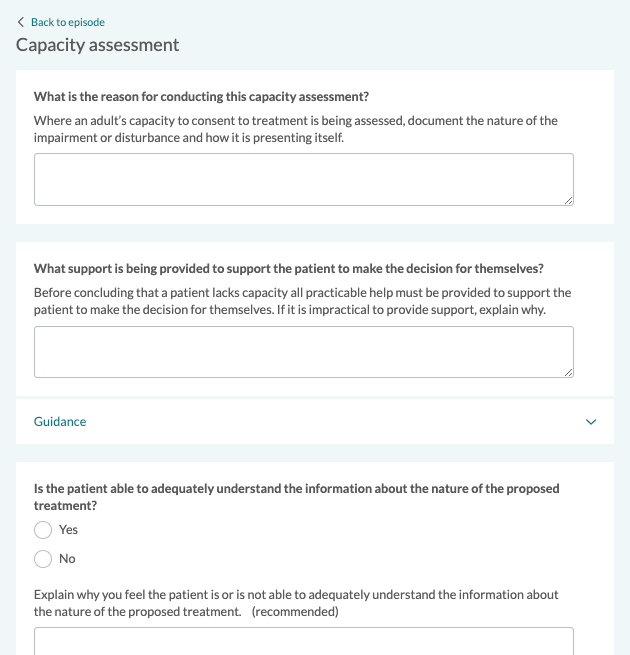
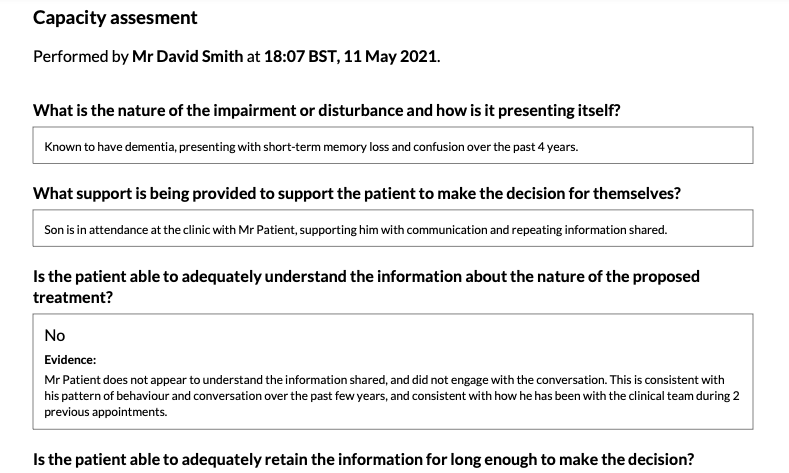
Concentric walks through the required elements for a capacity assessment, such as why it is being conducted, the support being given, and asks the 4 capacity questions - is the patient able to: understand the information, retain the information, weigh up the information, and communicate a decision. Evidence should be added to each of these elements, and then an overall assessment of capacity documented.
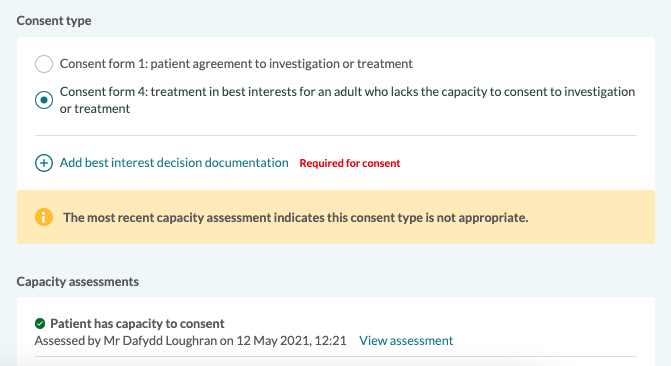
Where the outcome of a capacity assessment is not compatible with the consent type selected, this will be highlighted:
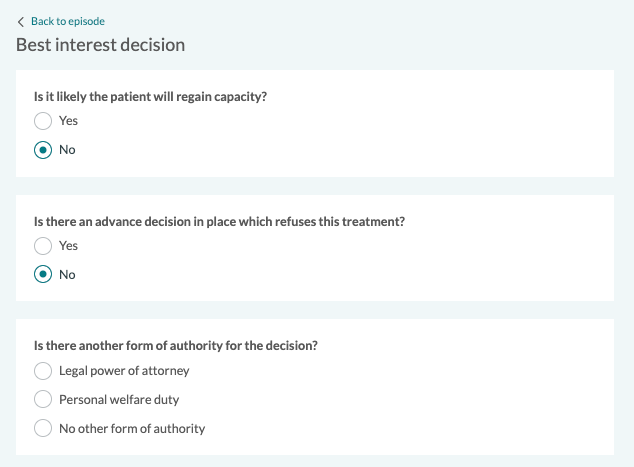
Treatment in best interest decision documentation
Where a patient does not have the capacity to give their consent to the treatment, a decision regarding the most appropriate treatment needs to be made by others in the patient’s best interest. There may be another individual who has the authority to make a decision on behalf of the patient (e.g lasting power of attorney - LPA), or if there is not, then the responsible clinician becomes the decision-maker.
Treatment in best interest documentation involves documenting whether the patient is likely to regain capacity (and if so whether treatment can wait until that point), whether there is a relevant advance decision in place, and whether there is another form of authority (e.g. LPA) for the decision.
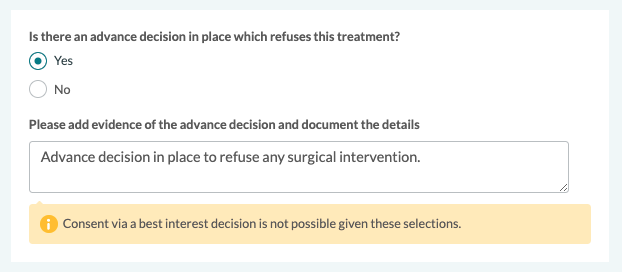
Where additional documentation is needed, for example where there is an advance decision which refuses treatment, then this is documented:
Responsible clinician as decision-maker
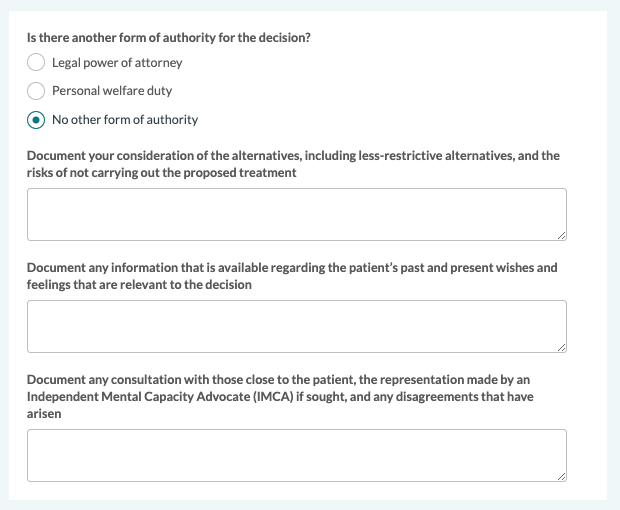
Where there is no other form of authority, then additional documentation is needed regarding the alternatives - including less-restrictive alternatives, information available regarding the patient’s past and present wishes, and consultation with those close to the patient (or if none available, the representation made by an Independent Mental Capacity Advocate).
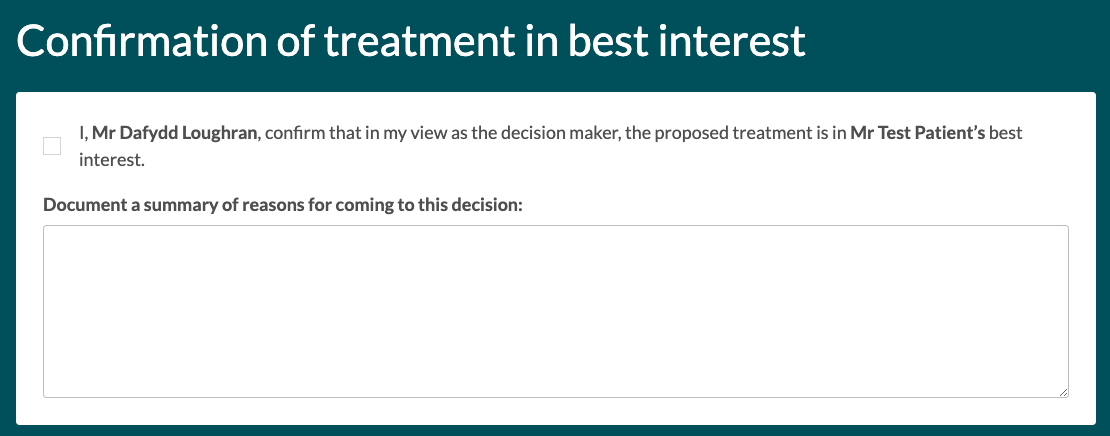
Once the other elements in clinician view are selected (as per the other consent types) then the responsible clinician can proceed to confirm the decision. (This part needs to be done on the responsible clinician’s Concentric login)
Legal power of attorney
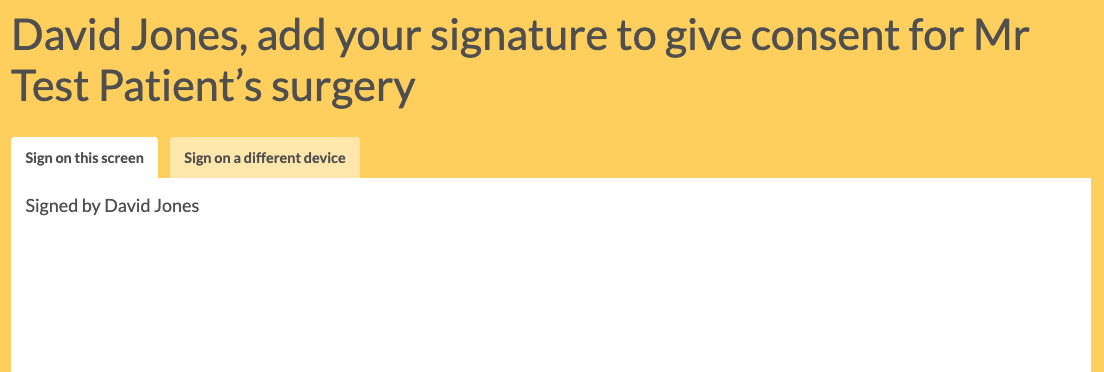
Where there is a legal power of attorney (LPA), their details are documented. Within consult view the LPA then documents what they have considered as part of making the best interest decision. They can then proceed through the consent flow (similar to the Consent Form 2 process where a parent/guardian signs to gives consent on behalf of a child).
Consent form 4 PDF
The relevant information is then added to the consent form, including the capacity assessment, best interest decision documentation, and consent statements of the responsible clinician or lasting power of attorney as appropriate.
Support
If you have any questions or suggestions regarding this process, please get in touch.